

Title: The Application of Uniform Civil Code in India: A Step Towards Equality and National Integration
Introduction
India, known for its rich cultural diversity, is a nation that takes pride in its unity amidst its diverse religious and cultural practices. However, one area that has often faced criticism is the personal laws governing various communities, which differ based on religion. To address this issue and promote a more equitable and integrated society, the concept of a Uniform Civil Code (UCC) has been a topic of debate for decades. In this article, we explore the significance, challenges, and potential benefits of implementing a Uniform Civil Code in India.
Understanding the Uniform Civil Code
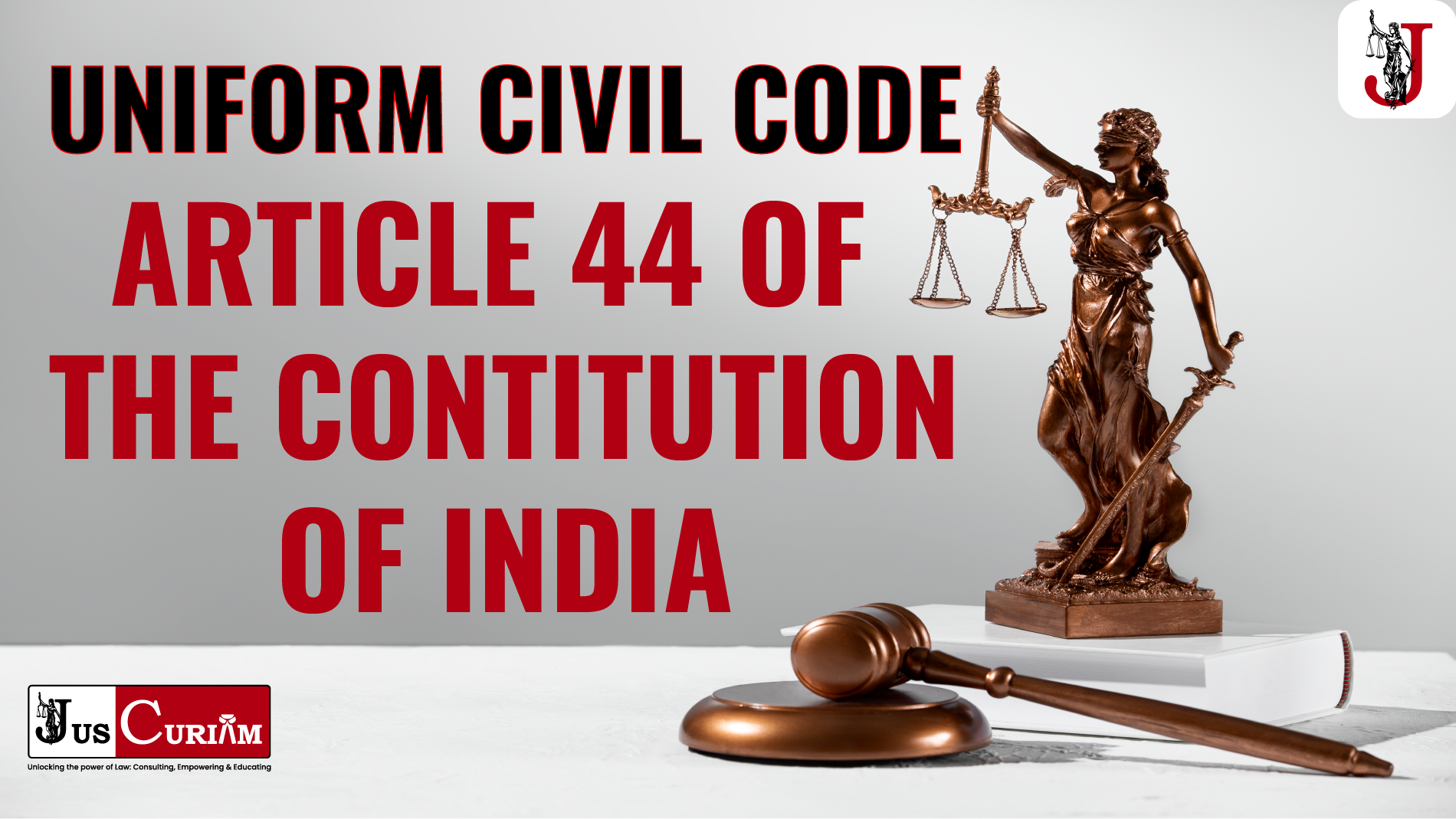
A Uniform Civil Code, as envisaged in Article 44 of the Indian Constitution Directive Principles, aims to replace the personal laws of various religious communities with a common set of laws governing matters such as marriage, divorce, inheritance, and adoption. Presently, India follows distinct personal laws for Hindus, Muslims, Christians, and other communities, leading to significant differences in rights and privileges. Advocates of a UCC argue that it will promote gender equality, secularism, and national unity by treating all citizens equally before the law, irrespective of their religious affiliations.
Advantages of a Uniform Civil Code
- Gender Equality: One of the most crucial aspects of a Uniform Civil Code is its potential to promote gender equality. In many personal laws, women may face discriminatory practices regarding marriage, divorce, property rights, and inheritance. Implementing a UCC can ensure equal rights and opportunities for women, empowering them to participate more actively in society.
- Secularism: India prides itself on its secular fabric, and the adoption of a Uniform Civil Code would be a significant step towards strengthening this secular character. A common set of civil laws would treat all citizens equally, irrespective of their religious beliefs, thereby enhancing the principle of secularism.
- National Integration: A Uniform Civil Code has the potential to foster a sense of national identity and unity by transcending religious divides. It emphasizes the notion of ‘one nation, one law,’ reinforcing the idea that all citizens are bound by the same set of laws and are part of a cohesive nation.
- Simplification of Laws: The current legal framework, with multiple personal laws, can be complex and confusing. A UCC would simplify the legal system, making it more accessible and understandable to citizens. This can reduce litigation and provide a more efficient legal process.
Challenges and Concerns
- Opposition from Religious Groups: Implementing a Uniform Civil Code faces significant resistance from various religious groups who argue that it would infringe upon their religious freedom and cultural practices. Convincing these groups about the necessity of a UCC while respecting their constitutional rights remains a considerable challenge.
- Preservation of Cultural Diversity: India’s strength lies in its diversity, and any attempt to implement a UCC should respect and preserve the unique cultural practices of different communities while ensuring that fundamental rights and equality are not compromised.
- Political Consensus: The topic of a Uniform Civil Code has been highly politicized, with different political parties holding diverse viewpoints. Achieving a broad political consensus on such a contentious issue is essential for its successful implementation.
Conclusion
The application of a Uniform Civil Code in India is an ambitious step towards fostering equality, secularism, and national integration. While it offers numerous advantages, it also faces considerable challenges that require sensitive handling and consensus-building. Any effort towards a Uniform Civil Code must involve a thoughtful and inclusive dialogue among all stakeholders, including religious groups, legal experts, policymakers, and citizens. A well-crafted and balanced Uniform Civil Code has the potential to strengthen India’s democratic fabric, upholding the principles of justice, equality, and fraternity.
Author: Dr. Dimple Jindal
Go online for legal updates at: www.juscuriam.com