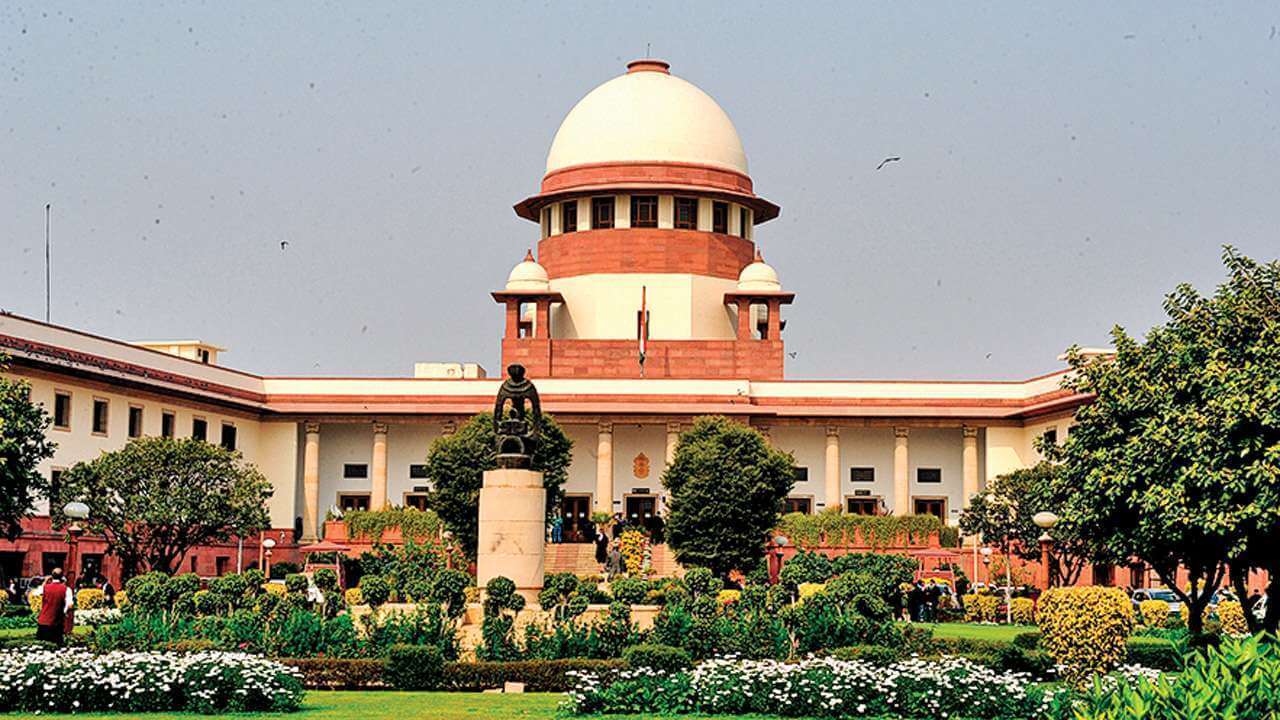
The Supreme Court of India has made numerous landmark decisions over the years, shaping the legal landscape and setting important precedents. Here are some notable landmark decisions of the Supreme Court of India:
Kesavananda Bharati v. State of Kerala (1973):
This case resulted in the famous “basic structure doctrine,” which established that certain fundamental features of the Constitution are beyond the power of amendment.
The Supreme Court held that the Parliament’s amending power is subject to judicial review and cannot alter the basic structure of the Constitution.
Maneka Gandhi v. Union of India (1978):
In this case, the Supreme Court interpreted Article 21 of the Indian Constitution, which guarantees the right to life and personal liberty.
The court expanded the scope of Article 21, stating that it encompasses several fundamental rights, including the right to travel abroad and the right to be heard.
Vishakha v. State of Rajasthan (1997):
This landmark judgment dealt with the issue of sexual harassment of women in the workplace.
The Supreme Court laid down guidelines known as the “Vishakha Guidelines” for preventing and addressing sexual harassment in workplaces until the enactment of specific legislation.
Indira Gandhi v. Raj Narain (1975):
This case involved the election dispute of then Prime Minister Indira Gandhi.
The Supreme Court upheld the principle of judicial review and held that even the Prime Minister is subject to the rule of law, and her election can be challenged on grounds of electoral malpractice.
Navtej Singh Johar v. Union of India (2018):
In this case, the Supreme Court struck down the colonial-era Section 377 of the Indian Penal Code, which criminalized consensual same-sex relations.
The court recognized the right to privacy, dignity, and equality, thereby decriminalizing homosexuality and affirming the rights of LGBTQ+ individuals.
Shayara Bano v. Union of India (2017):
This case dealt with the practice of triple talaq, a form of instant divorce prevalent in the Muslim community.
The Supreme Court declared the practice of triple talaq as unconstitutional, arbitrary, and discriminatory, affirming the rights of Muslim women.
Puttaswamy v. Union of India (2017):
In this case, the Supreme Court recognized the right to privacy as a fundamental right under the Indian Constitution.
The court held that the right to privacy is intrinsic to the fundamental rights enshrined in the Constitution and is essential for the protection of personal autonomy and dignity.
These landmark decisions represent a fraction of the significant judgments delivered by the Supreme Court of India. They have shaped the interpretation and application of the law, advancing constitutional principles, human rights, and social justice in India.